A Southern Town At The Crossroads
A Southern Town At The Crossroads
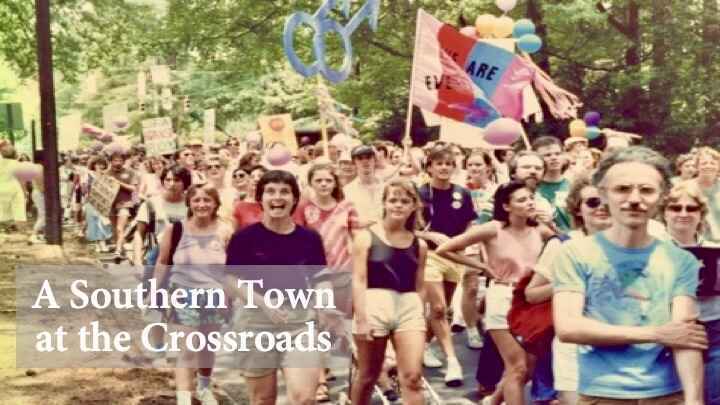
It was a politically hot summer in 1986 in Durham, North Carolina, long a textile and tobacco town. Recently elected Mayor Wib Gulley faced a fierce campaign by Christian fundamentalists and some conservatives to throw him out of office for issuing a proclamation affirming the rights of gay and lesbian citizens. A cross-section of Durham residents was fighting back, and after weeks of grassroots organizing, the community came together to reject hate and embrace its diversity. In doing so, Durham launched itself into an inclusive and prosperous future which has made it a beacon for the South and the nation.In June of 1986 Mayor Gulley of Durham, N.C. issued a proclamation for Anti-Discrimination Week, as had been done for several years. These annual proclamations regularly opposed race, religion and gender discrimination. No one foresaw the political firestorm that quickly broke out when Mayor Gulley added sexual orientation to this list. Durham was a mid-size city with an economy long reliant on now-fading tobacco and textile factories, and it was struggling to redefine itself. The Christian fundamentalists and conservatives who led the opposition to the mayor’s proclamation placed a strong claim on the city’s identity. Their strategy was to petition for a recall election to remove Mayor Gulley from office. Four decades ago, the rights of gay and lesbian people were up for grabs across the nation, and in a southern city like Durham, there was every reason to believe the recall petition would succeed. What followed was six weeks of struggle between the proponents of recall and the grassroots movement that sprung up to support Mayor Gulley, defend his proclamation, and move Durham and the South towards a new and inclusive future. Black and white faith leaders lined up on both sides of the battle. The recall forces put up tables all over town to gather the required number of signatures to force a recall election. Those opposed to recall ran a campaign of their own with radio and newspaper ads and publicity events. Soon they placed their own tables next to the pro-recall tables to urge Durham citizens not to sign the recall petition. The recall petition failed. Mayor Gulley remained in office, was soundly reelected for a second term as mayor, and then was elected for six terms in the N.C. Senate. The proclamation from 1986 still stands as an emblem of Durham, its character and its future. The economic and quality of life enhancements have extended to the whole Durham community. This is the story of that struggle and of the way a southern city actively chose to define itself. Durham rejected hatred and intolerance, embraced its diversity, and put itself on a path to an inclusive modernity that is today a beacon for the south and the nation.
Director | Rex Miller
Line Producer | Eric Mofford