Making the Law Real
Making the Law Real
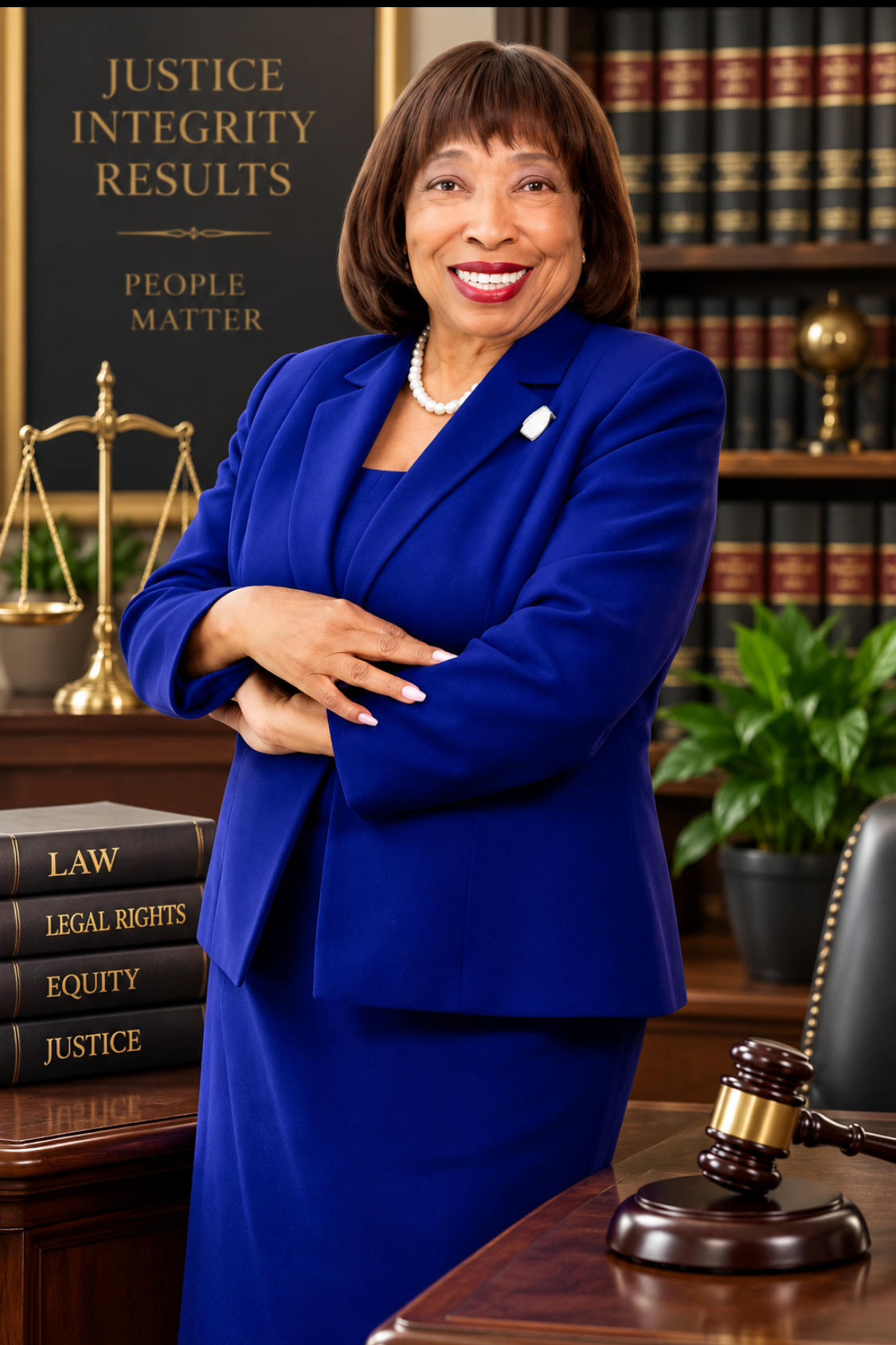
Raised in segregated Mississippi after the Supreme Court had declared school segregation unconstitutional, Bernice Bouie Donald became a groundbreaking American judge. Moving between her intimate personal history, present-day reflections, and contested cases, the film asks what happens when the ideals of law confront the complexity of real human lives.
The film opens in the present tense.
Judge Bernice Donald is preparing to speak to a room of young lawyers, reviewing family photographs, returning to a meaningful place in Mississippi or Memphis, or listening to an argument from one of her former cases. The precise opening will emerge through access, but the first scene will show her doing something rather than simply recounting what she once did.
Her memory carries us to Mississippi in 1957. *Brown v. Board of Education* has already been decided, yet Donald enters a segregated school. The contrast establishes the film’s central tension: a legal declaration is not self-executing. Institutions and people must give it force.
The first movement follows Donald’s entry into law and public authority. Experiences with inequality in schools and courts help draw her toward legal service. Her early career places her close to people for whom courts are immediate, intimidating, and consequential. When she campaigns for her first judgeship, her candidacy raises a question larger than any election: What does America expect a judge to look like?
The film resists racing toward federal appointment. It stays in the trial courts, where the daily behavior of a judge—tone, patience, discipline, dignity, speed, and discretion—shapes public faith in justice. Lawyers, staff, former clerks, and, where ethically appropriate, former litigants will describe Donald’s courtroom from different vantage points. Admiration will not substitute for observation. Criticism will not be treated as disloyalty.
Donald’s bankruptcy service creates a less familiar but revealing chapter. Bankruptcy is a place of competing legitimate claims: debtors seek survival and second chances; creditors seek payment; workers, families, homes, and businesses may all be at risk. Here, fairness cannot mean giving everyone what they want. It requires choices about loss.
The film then turns to three contested legal matters. Each case will be reconstructed as a human story rather than summarized as doctrine. One may reveal how a dispute involving press freedom can ultimately turn on procedural questions. Another may explore employment testing, disparate impact, competing definitions of merit, and the court’s role in ordering remedies. A third may examine free speech, religious expression, public safety, and the possibility that colleagues can interpret the same facts and precedent differently.
At least one principal case will place Donald’s reasoning in direct tension with a later majority or a persuasive critic. The audience will hear the strongest good-faith case against her position. The film will not ask viewers to accept disagreement as proof of failure; it will use disagreement to expose what judging actually entails.
The final movement returns to Donald in the present. Her work now may include teaching, mentoring, speaking, revisiting meaningful locations, or reflecting on a decision whose consequences remain unsettled. The film ends without a victory montage. Its question remains alive: If law does not enforce itself, who bears responsibility for making its promises real?
Director | Aurelien Tanguep