One in 17 Trillion
A young American is imprisoned in Japan based on DNA evidence that experts found was doctored. As his mother, lawyers, activists and journalists fight to free him, they take on a criminal justice system where more than 99% of trials end in conviction, and guilty verdicts are rarely overturned.
In February 2020, Christopher Payne, a 29-year-old American living in Japan, drunkenly fell asleep in the entranceway of a private home. Nothing was damaged or taken, and the owners declined to press charges. Before releasing him, police asked for a voluntary DNA swab. Certain he had nothing to hide, he agreed. Nearly two years later, that swab was used to charge him with a 2018 sexual assault, a crime he insists he was nowhere near.
At the crux of the case is DNA forensic analysis — the only evidence against Payne — and a legal system where more than 99% of criminal trials end in conviction.
Police forensic investigators flagged the victim’s sample as poor quality from the start. Payne’s profile was declared “not inconsistent” with the perpetrator’s, though it matched at only some loci. When he and his lawyers pushed for more detailed testing, the prosecution’s outside expert came back with a perfect match to a profile he claimed would occur just once in roughly 17 trillion people. In July 2024, Payne was sentenced to eight years with labor; his not-guilty plea lengthened the term.
Preparing his appeal, his Innocence Project Japan (IPJ) defense team brought in DNA expert Dr. Simon Ford, who saw signs the data had been edited. Once the raw files were disclosed by court order, Ford found that loci had been added and deleted to make Payne’s profile match the perpetrator’s. Ford also found that the state’s expert had flouted basic scientific protocols, skipped a vital control procedure, and analyzed the sample more than thirty times before arriving at the match. The expert who produced that result, Professor Yoshihiro Yamada, has worked for the prosecution on more than 1,100 cases. Not once have his findings pointed toward a defendant’s innocence. At the retrial of Iwao Hakamata, the most notorious wrongful conviction in Japanese history, Yamada withdrew his own exonerating evidence.
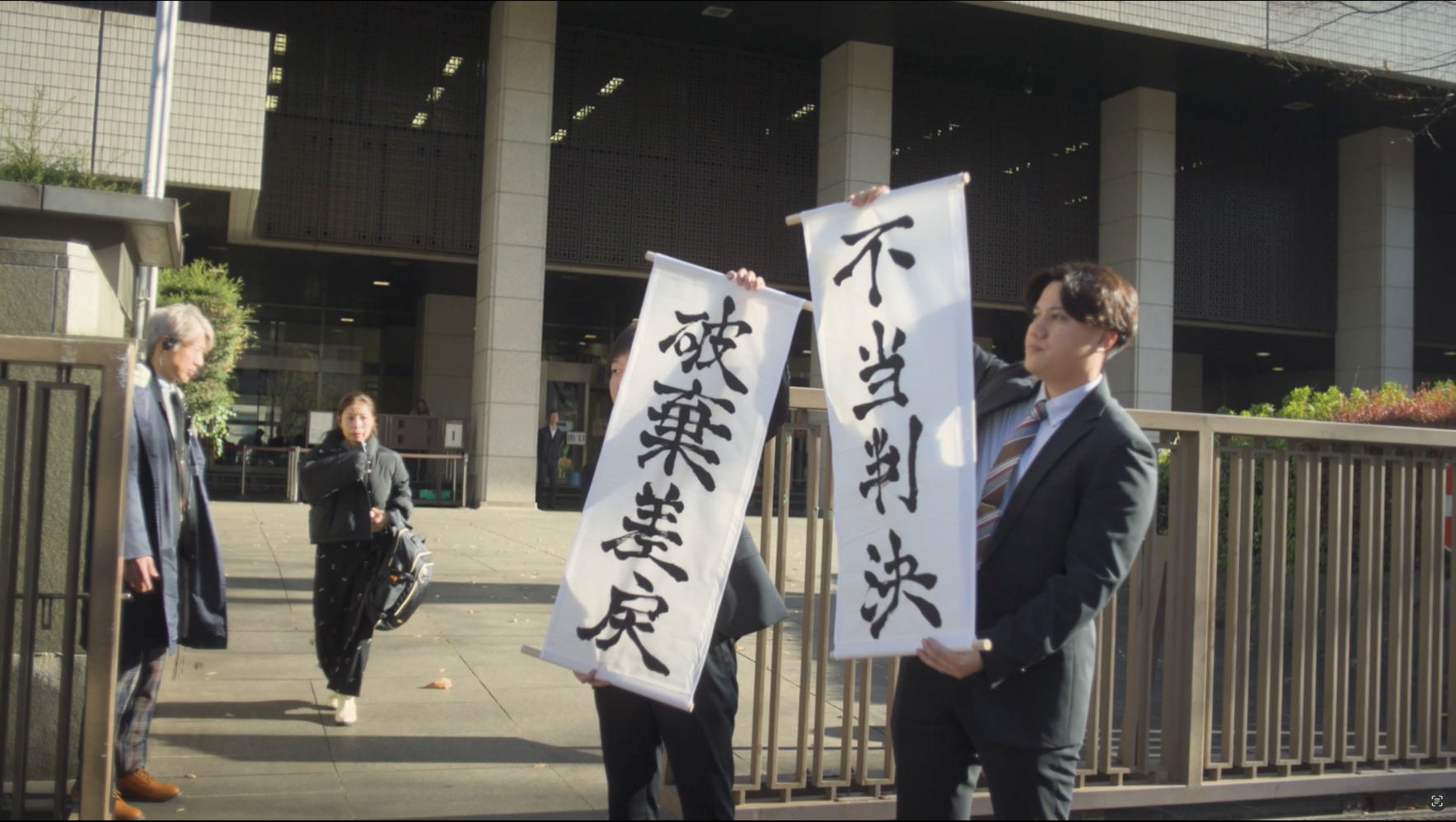
In December 2025, the Tokyo High Court overturned Payne’s original conviction and ordered a retrial. But Payne was neither freed nor exonerated. Eleven bail requests have been denied, and in June 2026 the Supreme Court rejected a special appeal. He waits for a district court to set a retrial date, languishing in solitary confinement — the routine fate of those who refuse to confess or who appeal — in failing health. He has now spent nearly five years in isolation: more than 100 times the 15-day limit beyond which the UN deems the practice psychological torture. It is also far longer than his original public defenders advised he would likely spend in a “regular” cell if he pled guilty and paid the victim compensation.
The film follows the people fighting for him. Ronda Payne, Chris’s mother, anchors the story from Indiana. In Japan, Kouta Handa-san — who founded the Justice4ChrisPayne campaign and persuaded IPJ to take the case after some 50 law firms declined — leads the effort on the ground. It also tracks investigative journalists Gavin Blair and Masao Awano, who continue to report on Payne’s case and other wrongful convictions across Japan.
Payne’s alibi places him in central Tokyo on the night of the crime; his cousin Kayla was in close contact with him around that time. Can cellphone data confirm his whereabouts? Did the police have other suspects and did they follow up on other leads? Have there been similar crimes in the area where the assault occurred? And will the current reform legislation now before lawmakers survive the Ministry of Justice’s resistance; will it actually give prosecutors more leeway to keep the innocent incarcerated, as its critics claim?
Director | Jonathan Clasberry
Producer | Gavin Blair